Brand Partnerships Effectiveness Model

How brands are successfully leveraging partnerships to grow their audiences and scale

Brands used to focus on what they said and where they said it. In this social age, it’s also about what they do and who they do it with. Partnerships are a powerful, emotive currency to drive relevancy and saliency with consumers and offer opportunities no other marketing solution can.

To provide you with a framework for how to think about culture and partnerships for your brand, we’ve assessed six successful yet diverse partnerships spanning film, television, gaming, fashion, music, and sport, with a variety of marketing objectives and activations. Using our Partnerships Development Model, we’ve analysed what’s driving these campaigns and enabled them.

What We Assessed

Partner fit

Synergy of the idea

Activation optimisation

Depth of engagement

Relevance across markets and cultures

Commercial model

Who We Assessed
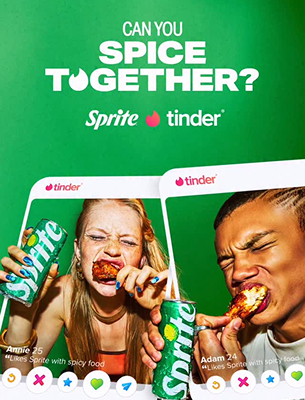
Sprite x Tinder
Expedia x Mattel's Ken
Doritos x F1
19 Crimes x Universal Monsters
Chupa Chups x Stranger Things

Key Takeaways

Whilst each brand partnership we analysed has different underlying elements that led to their success, there are clear shared commonalities between these six brand partnerships we can take away as learnings.

01

Start with Culture, Not Just the Partner

The strongest partnerships begin by identifying the cultural spaces your audience cares about, from sport and entertainment to dating, gaming or lifestyle. Properties like Formula 1 or shows such as Stranger Things demonstrate how tapping into existing fandoms can instantly boost relevance. As the examples show, effective partners can come from a wide range of places, from platforms like Tinder to evergreen characters such as Ken (Barbie), highlighting the breadth of partnership opportunities available to brands.

Action: Identify the cultural conversations your audience already participates in, then seek partners across adjacent cultural spaces that allow your brand to authentically enter those worlds.
02

Translate Partnerships Into Experiences

Partnerships are most effective when the collaboration becomes something consumers can interact with, rather than simply seeing a logo on packaging. The most successful campaigns extend IP into product, packaging, digital activations or real-world experiences. Promotional mechanics and themed rewards can also play an important role here, when prizes are embedded within the partner’s world, they feel more compelling and help drive deeper engagement.

Action: When designing a partnership, ask how the collaboration can be experienced through play, interaction or storytelling, including promotions or prizes that feel like a natural extension of the partnership.
03

Align Partnerships With Key Cultural Moments

Timing is a major driver of success. Campaigns that align with major cultural moments, such as sporting seasons, entertainment releases or anniversaries, benefit from built-in audience anticipation and momentum. These moments can also reinforce relevant consumption occasions, such as snacking during a Formula 1 race weekend or enjoying confectionery while watching Stranger Things, helping brands embed themselves naturally within audience rituals.

Action: Map partnerships to moments when interest in the IP naturally peaks, and consider how the collaboration can enhance the occasions when your product is already enjoyed.
04

Build Partnerships Into the Product and Retail Experience

Collaborations deliver stronger commercial impact when they are embedded directly into product design, retail visibility and shopper mechanics. Limited editions, themed packaging and in-store activations help convert cultural attention into sales.

Action: Ensure partnerships show up where purchase decisions happen by integrating the collaboration into product formats, packaging and retail environments.
05

Design Partnerships That Deliver Mutual Value

The most sustainable collaborations are built around shared value creation, where both brands gain something meaningful, whether that’s cultural relevance, audience access or retail reach. This turns partnerships into long-term growth platforms rather than one-off marketing campaigns.

Action: Structure partnerships so both sides contribute distinct strengths and benefit strategically, creating a collaboration that can evolve beyond a single activation.